
AI Digital Marketing and Artificial Intelligence in Marketing 2026
- Scott Patrick
- Jan 24
- 3 min read


Digital marketing in 2026 looks nothing like it did a few years ago. The biggest driver of this change is artificial intelligence. What started as simple automation tools has evolved into intelligent systems that can analyse behaviour, predict outcomes, personalise experiences, and scale marketing efforts far beyond what humans alone can achieve.
For businesses, this shift is not about replacing marketers. It is about working smarter, faster, and more strategically. Brands that understand how to integrate AI into their marketing operations are gaining massive advantages in visibility, customer engagement, and revenue growth.
This article explores how AI is reshaping digital marketing in 2026 and what businesses must do to stay competitive.
The Evolution of AI in Digital Marketing

Artificial intelligence in marketing did not appear overnight. Early AI tools focused mainly on automation, such as scheduling posts or sending emails. Today, AI goes much deeper.
Modern AI systems can process huge amounts of data in real time. They analyse customer behaviour, browsing patterns, purchase history, and engagement signals to make intelligent decisions. This allows marketers to move away from guesswork and base their strategies on real insights.
In 2026, AI is no longer a bonus feature. It is embedded into search engines, social media platforms, advertising systems, and content creation tools. If your marketing stack does not include AI, you are already behind.
AI-Powered Customer Targeting and Rationalisation
One of the most powerful impacts of AI in digital marketing is personalisation. Customers today expect brands to understand them. Generic messaging no longer works.
AI helps businesses segment audiences more accurately by identifying patterns that humans would easily miss. Instead of targeting broad groups, AI allows marketers to speak to individuals based on their interests, behaviour, location, and intent.
This leads to more relevant ads, better email performance, higher conversion rates, and stronger customer loyalty. When users feel understood, they are more likely to trust a brand and take action.
Content Creation at Scale Without Losing Quality
Content remains the foundation of digital marketing. What has changed is how content is created and distributed.
AI tools now assist with brainstorming ideas, drafting content, optimising headlines, and improving readability. This allows businesses to publish more content consistently without sacrificing quality.
However, the most successful brands use AI as a support tool, not a replacement. Human creativity, brand voice, and strategic direction are still essential. AI handles speed and structure, while humans provide context, emotion, and originality.
When used correctly, AI enables marketers to focus on strategy instead of repetitive tasks.
Predictive Analytics and Smarter Decision Making
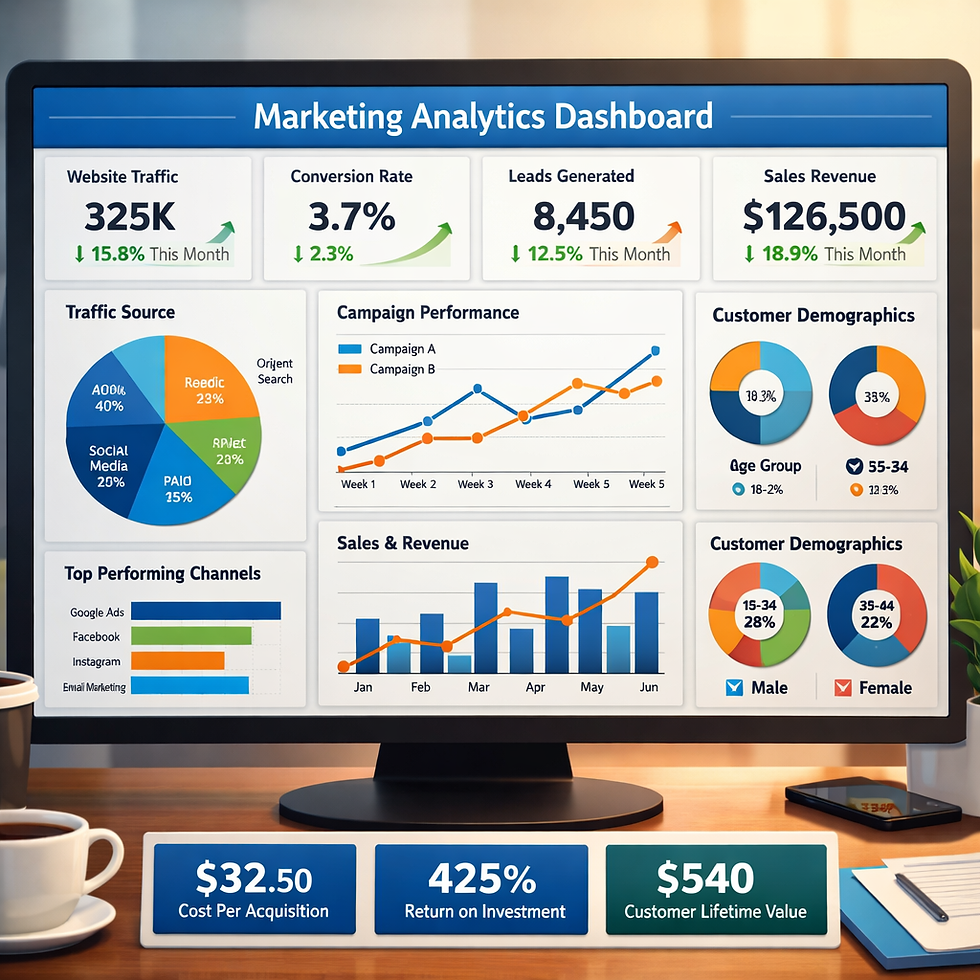
Another major advantage of AI is predictive analytics. Instead of reacting to past performance, businesses can now anticipate future outcomes.
AI can predict which leads are most likely to convert, which customers are at risk of leaving, and which campaigns will perform best before launch. This allows marketers to allocate budgets more effectively and reduce wasted spending.
In 2026, smart marketing is proactive, not reactive. AI gives businesses the ability to make decisions with confidence rather than intuition.
AI-Driven Advertising and Campaign Optimisation
Digital advertising has become increasingly complex. Platforms now rely heavily on AI to manage bidding, placements, and targeting.
AI-powered advertising systems constantly test variations, analyse performance, and optimise campaigns in real time. This results in better performance and lower cost per conversion.
For businesses, this means less manual micromanagement and more focus on creative direction and messaging. Marketers who understand how to work with AI-based ad platforms gain a strong competitive edge.
The Role of Human Strategy in an AI World
Despite all these advancements, AI cannot replace strategic thinking. AI does not understand brand values, long-term vision, or emotional storytelling the way humans do.
The strongest marketing teams in 2026 are those that combine human insight with AI efficiency. Humans set the goals, define the message, and guide the brand. AI executes, optimises, and scales those efforts.
This balance is what separates high-performing brands from those that struggle.
What Businesses Should Do Right Now
To stay competitive in 2026, businesses should start by auditing their current marketing processes. Identify areas where AI can improve efficiency, accuracy, and results.
Invest in tools that align with your goals, whether that is content creation, analytics, advertising, or customer engagement. Most importantly, train your team to understand how to work with AI rather than fear it.
The future belongs to businesses that adapt early.
Final Thoughts
Artificial intelligence is reshaping digital marketing at every level. From how content is created to how customers are targeted and campaigns are optimised, AI is changing the rules of the game.
For brands like OasisOne and the businesses it serves, embracing AI is not just a trend. It is a long-term strategy for growth, relevance, and success in a rapidly evolving digital landscape.

Comments